In slang, crack most often means crack cocaine, a highly addictive illegal drug, but it can also mean a joke, an attempt, or something so good it is hard to stop.
Few words carry as many meanings as “crack.” Depending on who says it and where, it can describe a drug, a joke, a skilled expert or even a show you cannot stop watching.
The drug meaning is the most widely known and the most serious, since it refers to a smokable form of cocaine. Because it is so closely tied to addiction, people also use “crack” playfully for anything hard to put down, like a snack or a TV series.
In everyday English, the word appears in lighter phrases such as “crack a joke,” “have a crack at it” and “crack team.” British and Irish speakers use several of these more often than Americans do.
This guide walks through each meaning with clear examples and the context clues that tell them apart. You will also learn when it is wise to avoid the word, so you can read it correctly in a text, a song lyric or a conversation.
Quick Answer:
In slang, crack can mean a joke, an attempt, a witty remark, a highly skilled person, or, in some contexts, a reference to crack cocaine. The surrounding context determines the meaning.
What Does “Crack” Mean in Slang?
Common Slang Meanings of Crack
The word crack has several informal meanings. Some are completely harmless, while others can be offensive or related to drugs.
Common meanings include:
- A joke or witty comment: “He made a crack about my haircut.”
- An attempt: “I’ll have a crack at it.”
- A skilled person: “She’s a crack player.”
- A difficult challenge: “Let’s crack this problem.”
- To make someone laugh: “That story cracked me up.”
- A drug reference: “Crack” can refer to crack cocaine.
- A sharp or critical remark: “He made a crack about my decision.”
Because these meanings are so different, simply seeing the word “crack” does not tell you what the speaker means.
Crack Slang Full Form and Definition
Does Crack Have a Full Form?
No. Crack is not an acronym, so it does not have a traditional slang “full form.” It is an English word that has developed different meanings over time.
If someone searches for “what does crack stand for?”, the answer depends on the context. In ordinary slang, crack does not stand for a group of words.
For example:
| Expression | Meaning | Tone |
| Crack a joke | Tell a joke | Casual |
| Have a crack | Try something | Informal |
| Crack up | Laugh intensely | Casual |
| Crack player | Highly skilled person | Positive |
| Crack a problem | Solve something | Informal |
| Crack cocaine | A form of cocaine | Drug-related |
The important distinction is that crack slang meaning is not one fixed definition.
Is Crack Slang Rude, Offensive, or Neutral?
When Crack Is Neutral
Many uses of crack are completely harmless.
For example:
“I’ll have a crack at fixing the computer.”
This means, “I’ll try to fix the computer.”
Similarly:
“He is a crack football player.”
This means the person is highly skilled.
When Crack Can Be Offensive
The word can also describe a joke or remark made at another person’s expense.
For example:
“He made a crack about her appearance.”
This can mean he made a sharp, mocking, or insulting comment.
The word can also be sensitive when used as a reference to crack cocaine. In such cases, the context is completely different from harmless expressions such as “crack a joke.”
Context Changes Everything
| Example | Meaning | Tone |
| “Crack a joke.” | Tell a joke | Neutral |
| “Have a crack at it.” | Try it | Casual |
| “He’s a crack player.” | Very skilled | Positive |
| “She made a crack about him.” | Sharp remark | Potentially negative |
| “Crack cocaine” | Drug reference | Sensitive |
Where Is Crack Slang Commonly Used?
Texting and Casual Conversations
In everyday texting, crack often appears in phrases rather than as a standalone slang word.
Examples include:
- “That cracked me up.”
- “I’ll have a crack at it.”
- “Stop cracking jokes.”
- “He made a funny crack.”
- “Give it a crack.”
These expressions are usually informal and conversational.
British and Australian English
The expression “have a crack” is especially common in British and Australian informal English. It generally means to try or attempt something.
For example:
“Have a crack at the puzzle.”
This means:
“Try to solve the puzzle.”
Someone unfamiliar with this expression might misunderstand it, especially if they mainly use American English.
Sports
In sports, crack can describe someone who is highly skilled.
For example:
“He’s a crack striker.”
This means he is an excellent or highly capable striker.
The word can also describe a strong team:
“They have a crack team.”
Here, “crack” means exceptionally skilled or effective.
Gaming and Online Communities
Gaming conversations often use crack-related expressions such as:
“Let’s crack this level.”
This usually means solving or completing something difficult.
However, gaming communities can also use “crack” in technical contexts, where it may mean bypassing software protection. That is a different technical meaning and should not automatically be confused with ordinary slang.
Real-Life Examples of Crack Slang
Friendly Example
“That meme absolutely cracked me up.”
Here, cracked me up means made me laugh a lot.
Casual Example
“I’ll have a crack at fixing the bike.”
This means the speaker will try to fix the bike.
Argumentative Example
“He made a crack about my job.”
Here, crack means a sharp or potentially insulting remark.
Gaming Example
“Let’s crack this puzzle before the timer runs out.”
Here, crack means solve or figure out.
Social Media Example
“That comment cracked me up!”
This is a casual way to say the comment was very funny.
Skilled-Person Example
“She’s a crack photographer.”
This means she is highly skilled at photography.
Origin and Background of the Slang Word Crack
How Did Crack Develop Its Different Meanings?
The word crack has a long history in English and originally referred to a break, split, or sharp sound.
Over time, it developed many figurative meanings. A “crack” could describe something sudden or sharp, which helped the word become associated with a quick remark or joke.
The idea of making an attempt also developed into expressions such as “have a crack at it.”
Likewise, describing someone as a “crack” person came to suggest that they were excellent or highly skilled.
This is why the modern word can have several seemingly unrelated meanings. Many of them developed from older literal or figurative uses.
Crack vs Similar Slang Terms
Comparison of Common Expressions
| Expression | Meaning | Example |
| Crack a joke | Tell a joke | “He cracked a joke.” |
| Crack up | Laugh a lot | “I cracked up.” |
| Have a crack | Try something | “Have a crack at it.” |
| Crack a problem | Solve something | “Let’s crack the puzzle.” |
| Make a crack | Make a sharp remark | “He made a crack about it.” |
| Crack player | Very skilled person | “She’s a crack player.” |
These expressions may look similar, but their meanings can be very different.
Crack vs Joke, Roast, and Banter
How Are They Different?
The slang word crack can overlap with other words used for humor, but the tone is not always identical.
| Term | Common Meaning | Typical Tone |
| Crack | A witty or sharp remark | Casual |
| Joke | Something intended to make people laugh | Neutral |
| Roast | Humorous criticism of someone | Playful or harsh |
| Banter | Friendly teasing | Casual |
| Insult | Offensive statement | Negative |
| Comment | General remark | Neutral |
For example, a crack about someone’s haircut might be funny, but it could also be insulting depending on how it is delivered.
difference btw “Crack Up” and “Crack On”
Crack Up
It commonly means to laugh intensely.
Example:
“That video made me crack up.”
It can also have other meanings in different contexts, including emotionally breaking down.
Crack On
Crack on is an informal expression meaning to continue working or get started.
Example:
“Let’s crack on with the project.”
This expression is particularly common in British English.
Crack Down
Crack down means to take strong action against something.
Example:
“The authorities are cracking down on illegal activity.”
This is another example of how the word “crack” can form completely different meanings when combined with another word.
When Should You Avoid Using Crack Slang?
Formal Writing
Some uses of crack are perfectly acceptable in formal English, but slang expressions such as “have a crack at it” may sound too casual in academic or professional writing.
Instead of:
“I’ll have a crack at the report.”
you could write:
“I will attempt to complete the report.”
Sensitive Contexts
You should also be careful because crack can refer to a dangerous illegal drug.
If the conversation is professional or the audience may misunderstand your meaning, use more precise wording.
For example, if you mean “try,” simply say attempt or try.
If you mean “joke,” say joke or remark.
Clear wording reduces the chance of confusion.
Polite Alternatives to Crack Slang
Better Alternatives Based on Meaning
| If You Mean “Crack” | Alternative |
| Tell a joke | Make a joke |
| Try something | Attempt it |
| Solve something | Figure it out |
| Make a sharp remark | Make a comment |
| Laugh intensely | Laugh a lot |
| Highly skilled | Excellent or highly skilled |
| Continue working | Continue or proceed |
Choosing an alternative is especially useful in formal communication.
For example:
Casual: “I’ll have a crack at the problem.”
Professional: “I’ll try to solve the problem.”
Both communicate the same basic idea, but the second is more suitable for formal situations.
Why Do People Use Crack Slang?
It Makes Conversations More Natural
Slang helps people communicate in a relaxed way.
For example:
“I’ll have a crack at it.”
sounds more casual and conversational than:
“I will attempt to do it.”
Neither is necessarily better. The appropriate choice depends on the audience.
It Adds Personality
Expressions such as “crack me up” and “have a crack” can make speech feel more lively and expressive.
It Saves Time
Slang expressions often communicate an idea quickly. Instead of explaining that someone made a witty and slightly critical remark, a speaker might simply say:
“He made a crack.”
This makes everyday communication more efficient.
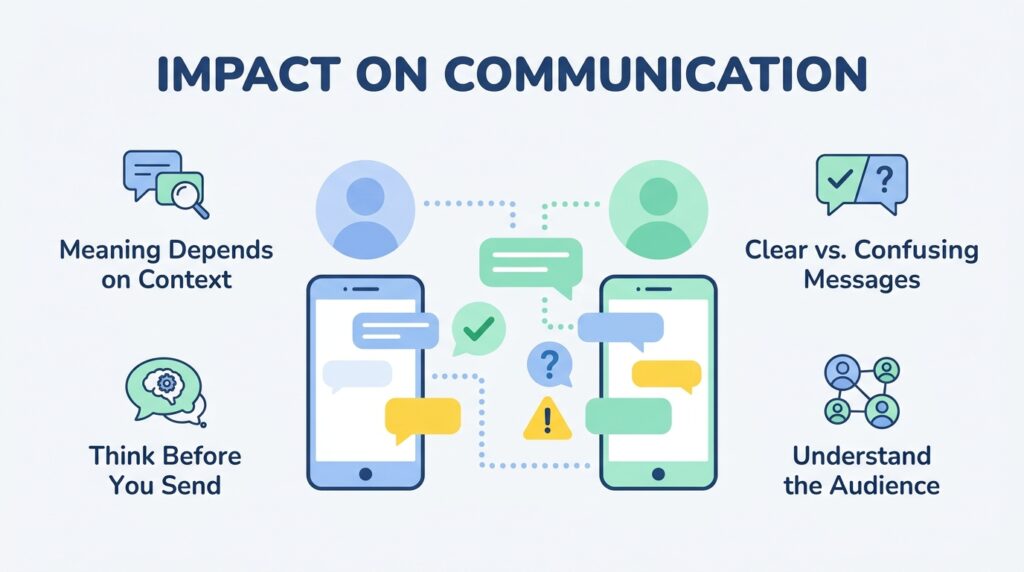
Impact of Crack Slang in Communication
Positive Effects
Using crack slang appropriately can make communication:
- More natural
- More conversational
- More expressive
- More humorous
- Easier among people who understand the expression
Possible Problems
However, slang can also create confusion.
A person who is unfamiliar with British or Australian English may not understand “have a crack” immediately.
Likewise, someone seeing the word “crack” without context may think of the drug rather than a joke or attempt.
This is why the surrounding sentence is extremely important.
Is Crack Slang Safe for Social Media?
Can You Use Crack on Social Media?
Many harmless uses of crack are perfectly normal on social media.
For example:
“This video cracked me up!”
or:
“I’m going to have a crack at this challenge.”
These are ordinary informal expressions.
However, because crack can also refer to an illegal drug, the meaning of a post should be clear. Avoid wording that could unintentionally suggest drug use, especially in professional or public-facing content.
Social media posts should always consider audience, context, and tone.
How to Understand Crack Definition Slang in Text
Look at the Words Around It
Context is the easiest way to identify the intended meaning.
Consider these examples:
“That cracked me up.”
Meaning: It made me laugh.
“I’ll have a crack at it.”
Meaning: I’ll try it.
“He’s a crack player.”
Meaning: He’s highly skilled.
“She made a crack about his clothes.”
Meaning: She made a sharp or possibly insulting comment.
“Crack cocaine.”
Meaning: A specific illegal drug.
The same word appears in every example, but the meaning changes completely.
FAQs
What Is “Cracked” in Gen Z Slang?
In Gen Z slang, “cracked” most often means extremely skilled, especially at video games. If someone says “he’s cracked at Valorant,” they mean the player is exceptionally good. It can also describe someone acting wild or unhinged, as in “you’re cracked,” so the tone and the topic of the chat tell you which meaning is intended.
What Does “Crack” Mean in Slang?
In slang, “crack” most commonly refers to crack cocaine, a highly addictive illegal drug. It also works as a casual word for a joke (“a cheap crack”), an attempt (“have a crack at it”), or something so addictive it is hard to put down (“this show is crack”). The drug meaning is the most serious, so the word is best avoided in jokes unless the audience clearly understands the context.
What Are All the Meanings of Crack?
“Crack” has more than a dozen meanings, and they fall into a few groups.
- Physical meanings: a narrow gap or fissure, a sharp snapping sound, or the verb for breaking something, as in “crack an egg”
- Skill and success: solving something (“crack the code”), or an expert, as in “crack team” and “crack shot”
- Humor and attempts: a joke (“crack a joke”), laughing uncontrollably (“crack up”), or trying something (“have a crack”)
- Action phrases: “crack down” (enforce strictly), “crack on” (carry on, mostly British), “crack open” (open a drink or a container)
- Time: “the crack of dawn” for very early morning
- Slang: the drug, something extremely addictive, or, in Gen Z gaming talk, “cracked” for highly skilled
- Vulgar use: a crude reference to a part of the body, which is best avoided in polite writing
What Does “I Am Gonna Crack You” Mean?
“I am gonna crack you” usually means “I am going to hit you” and is often a threat or a heated joke. It is common in British, Irish and Australian slang, where “crack” can mean striking someone, as in “crack him one.” In gaming or friendly banter, the same sentence can simply mean “I am going to beat you,” so context and tone are the best clues. If it comes from an angry person in real life, treat it seriously.
What Does a “Crack Lady” Mean?
“Crack lady” is a derogatory term for a woman who uses crack cocaine, so it is better not to use it. The phrase is considered offensive because it labels and stereotypes a person struggling with addiction. In rarer cases, “crack” works as an adjective meaning excellent, as in “a crack shot,” so “a crack lady” could describe a highly skilled woman, but that usage is uncommon and easily misunderstood.
Conclusion
Understanding the crack definition slang requires looking at the context rather than relying on a single meaning. The word can be used in several informal expressions, including “crack a joke,” “crack me up,” “have a crack,” “crack player,” and “crack a problem.”
In casual English, crack can describe an attempt, a funny or sharp remark, exceptional skill, or the act of solving something. However, the word can also have a sensitive meaning because it is commonly associated with crack cocaine.
There is no official crack slang full form because the word is not an acronym. Its different meanings developed naturally through the history of English and its many expressions.
If you encounter crack definition slang in text, pay attention to the words around it. A sentence about laughing probably refers to humor, while “have a crack” usually means trying something. A reference involving drugs has an entirely different meaning.
The safest approach is simple: understand the context, consider the audience, and choose clear wording when the meaning could be misunderstood. :::
Must Read!

I am Alisha Abbas, a slang expert and language enthusiast specializing in modern slang, internet expressions, and everyday language trends. I study the meanings, origins, and cultural influences behind slang words to make them easy to understand for readers. My work focuses on exploring how language evolves and helping people communicate better in today’s fast-changing digital world.