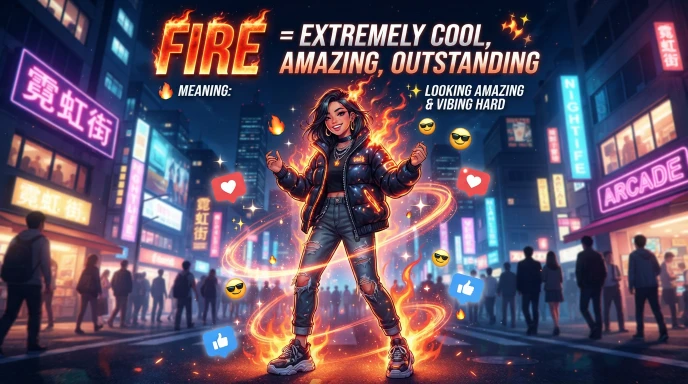
“Fire” in slang means something is extremely cool, impressive, or excellent. 🔥
Fire meaning in slang is commonly used to describe something that is extremely good, impressive, exciting, or high quality. If someone says “That song is fire” or “Your outfit is fire,” they are giving a strong compliment.
People often search for fire meaning slang, what does fire stand for, or fire meaning in text because slang changes quickly through social media, music, gaming, and online conversations. The word “fire” has moved beyond its original meaning of flames and burning and has become a popular way to show excitement and approval.
You may see this slang used in comments, messages, captions, and conversations between friends. However, understanding the context is important because “fire” can have different meanings depending on how it is used.
What Does Fire Mean in Text?
In text messages and online communication, fire means something is outstanding, attractive, or impressive.
When someone writes:
- “This beat is fire.”
- “Your new profile picture is fire.”
- “That game update is fire.”
They are not talking about actual flames. They are saying that something is really good.
The slang is often used as a short and energetic way to express excitement.
Definition of the Slang
Fire Full Form
Unlike some internet abbreviations, fire does not have a specific full form in slang. It is a regular English word that developed a new meaning through popular culture and online communication.
Fire Meaning Slang Definition
Fire (slang): Something that is excellent, impressive, stylish, exciting, or highly enjoyable.
Examples:
- A “fire song” = a very good song
- A “fire outfit” = a stylish outfit
- A “fire performance” = an amazing performance
Is Fire Rude, Offensive, or Neutral?
The slang word fire is generally neutral and positive.
It is usually used as a compliment and is not considered rude or offensive. However, like all slang, the appropriateness depends on the situation.
Appropriate situations:
- Talking with friends
- Social media comments
- Gaming chats
- Informal conversations
Situations where it may not fit:
- Formal business emails
- Academic writing
- Professional reports
For example:
Casual:
“Your presentation was fire!”
Professional:
“Your presentation was excellent and very impressive.”
Where Is Fire Commonly Used?
The slang fire is widely used in:
- Social media platforms
- Text messages
- Music communities
- Gaming communities
- Sports conversations
- Fashion discussions
- Online reviews
It became especially popular through hip-hop culture, internet communities, and youth conversations.
Real-Life Examples of Fire Usage

Friendly Examples
Friend 1: I just bought these new shoes.
Friend 2: Those are fire! They look amazing.
Meaning: The shoes are very stylish.
Casual Examples
“This restaurant’s new burger is fire.”
Meaning: The burger tastes extremely good.
Argumentative Example
Person A:
“I think that movie was boring.”
Person B:
“Really? I thought the action scenes were fire.”
Meaning: Person B strongly believes the action scenes were excellent.
Gaming or Social Media Context
“Your gameplay was fire 🔥”
Meaning: The player performed extremely well.
“New skin drop is fire 🔥”
Meaning: The new game item looks impressive.
Origin and Background of the Slang Fire
The slang use of fire developed from the idea that something “hot” or “burning” could represent excitement, energy, or popularity.
The connection between heat and excellence has existed for a long time. Expressions like “hot music” or “hot trend” were used before “fire” became common slang.
The modern use of “fire” became more popular through:
- Hip-hop and music culture
- Internet communities
- Social media platforms
- Memes and online comments
The fire emoji (🔥) also helped spread this meaning by becoming a quick symbol for something impressive or exciting.
Comparison With Similar Slang Terms
| Slang Term | Meaning | Example |
| Fire | Extremely good or impressive | “That track is fire.” |
| Lit | Exciting, energetic, fun | “The party was lit.” |
| Dope | Cool, excellent | “That jacket is dope.” |
| Sick | Surprisingly good | “That trick was sick.” |
| GOAT | The best of all time | “She is the GOAT.” |
Although these words are similar, they have slightly different tones. “Fire” usually focuses on excitement and quality, while “GOAT” suggests someone or something is among the greatest ever.
When to Avoid Using Fire
Although “fire” is popular, it is not suitable for every situation.
Avoid using it in:
- Formal workplace communication
- Official documents
- Academic assignments
- Professional presentations
Instead of:
“Your report is fire.”
Use:
“Your report is excellent.”
Using slang in the wrong setting can make communication appear less professional.
Polite Alternatives to Fire
If you want a more formal way to express the same idea, use:
- Excellent
- Outstanding
- Impressive
- Amazing
- Exceptional
- High quality
- Remarkable
Examples:
Slang:
“Your design is fire.”
Polite alternative:
“Your design is impressive.”
Why People Use This Slang
People use fire because it is:
- Short and easy to understand
- More expressive than simple words like “good”
- Popular in online conversations
- A way to show excitement quickly
Slang helps people communicate emotions and build connections within certain communities.
Impact of Using Slang in Communication
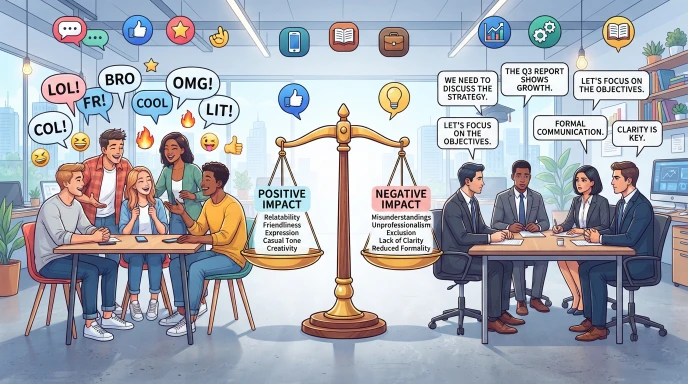
Slang can make conversations feel more natural and friendly. It helps people express personality and emotions.
Benefits of using slang:
- Creates a casual tone
- Builds social connection
- Makes conversations more engaging
Possible drawbacks:
- Older audiences may not understand it
- Meanings can change over time
- It may sound inappropriate in professional settings
Good communication depends on knowing your audience.
Is Fire Safe for Social Media?
Yes, fire is generally safe for social media.
It is commonly used in:
- Comments
- Captions
- Messages
- Gaming chats
The fire emoji (🔥) is also widely used to show excitement or approval.
However, users should remember that slang meanings depend on context. A word that works in a casual comment may not work in a professional online profile.
More Examples of Fire Meaning in Different Situations
Music
“That new album is fire.”
Meaning: The album is excellent.
Fashion
“Your jacket is fire.”
Meaning: The jacket looks stylish.
Food
“This pizza is fire.”
Meaning: The pizza tastes amazing.
Sports
“That goal was fire!”
Meaning: The goal was impressive.
Online Posts
“Your photography skills are fire 🔥”
Meaning: The photography is excellent.
FAQs About Fire Meaning in Slang
What does fire mean in slang?
Fire means something is amazing, excellent, impressive, or very enjoyable.
What does fire mean in text messages?
In text messages, fire is usually a compliment showing excitement or approval.
Is fire a bad word?
No. Fire is generally a positive slang term and is not offensive.
What does the fire emoji 🔥 mean?
The fire emoji usually means something is exciting, attractive, impressive, or trending.
Can I use fire in professional conversations?
It is better to avoid slang like fire in formal communication and use words like excellent or impressive instead.
What does “that is fire” mean?
“That is fire” means “That is really good” or “That is impressive.”
Conclusion
Fire meaning in slang refers to something that is excellent, impressive, exciting, or high quality. The phrase is commonly used in text messages, social media, music, gaming, and casual conversations.
Understanding fire meaning slang helps you communicate naturally online while avoiding confusion. Although the term is positive and widely accepted, always consider your audience and situation before using slang.
In casual conversations, “fire” is a simple and powerful way to show excitement. In formal settings, clearer words like “excellent” or “outstanding” are usually better choices.
Read more about!
Asian Slang Words Meaning in Text
What Does OMS Mean Slang Meaning in Text

I am Alisha Abbas, a slang expert and language enthusiast specializing in modern slang, internet expressions, and everyday language trends. I study the meanings, origins, and cultural influences behind slang words to make them easy to understand for readers. My work focuses on exploring how language evolves and helping people communicate better in today’s fast-changing digital world.