“Neck” in text slang usually means to kiss or make out romantically with someone.
Aaj kal social media aur texting mein naye naye slang words har roz sunne ko milte hain, aur inmein se ek lafz hai “neck”. Agar aap ne bhi kisi chat ya caption mein yeh word dekha hai aur confuse ho gaye hain, to yeh guide aap hi ke liye hai.
“Neck” ka matlab literal meaning se bilkul alag hota hai jab yeh text slang ki shakal mein use hota hai. Yeh word aksar romantic ya flirty conversations mein kisi khaas action ya feeling ko describe karne ke liye kaha jata hai.
Is guide mein hum aap ko batayenge ke “neck” ka asli matlab kya hai, yeh kahan se aaya, aur log ise kis tarah use karte hain. Saath hi kuch real-life examples bhi denge taake aap easily samajh sakein.
Quick Answer:
In slang, “neck” usually means kissing or making out, especially in a romantic or intimate way. The meaning depends on context, relationship, and tone.
What does neck mean in text?
The slang term “neck” usually refers to kissing someone passionately or making out. It is a shortened informal expression often used in texting, social media, and casual conversations.
For example, someone might say:
- “They were necking at the party.”
- “Are they just hanging out, or are they necking?”
In these examples, “necking” means romantic kissing. The term is generally associated with teenage slang, casual speech, and older informal expressions.
However, “neck” can have other meanings in different situations. Some people may use it as a joke, a nickname, or part of another phrase. Always consider the surrounding words before assuming the meaning.
Neck full form
Unlike abbreviations such as “LOL” or “BRB,” neck does not have a full form. It is not an acronym.
The neck meaning slang comes from informal English usage where “neck” became associated with kissing and romantic physical affection.
Definition:
Neck (slang): To kiss or make out with someone, usually in a romantic or passionate way.
Related forms include:
- Necking: The act of kissing or making out.
- Necked: Past tense meaning someone kissed or made out.
The phrase “what does neck stand for” can sometimes appear online, but the word does not stand for separate letters. It is simply a slang expression.
Is neck rude, offensive, or neutral?
The word “neck” is usually not considered offensive, but it can be informal and sometimes suggest a private or romantic situation.
If it is appropriate depends on:
- Who you are talking to
- The topic of conversation
- The platform where it is used
- The relationship between people
Examples:
- Among close friends: It may sound playful or normal.
- In a workplace message: It may be inappropriate or confusing.
- In a formal article or conversation: A clearer word like “kiss” may be better.
The term itself is not a swear word, but some people may find it too personal depending on the context.
Where is neck commonly used?
The slang term “neck” is commonly found in:
- Text messages
- Social media comments
- Teen and young adult conversations
- Movies and TV discussions
- Informal storytelling
- Dating conversations
It is more common in casual English-speaking environments, especially when people discuss relationships or romantic situations.
Because slang changes over time, younger generations may use different expressions instead. Some communities may understand “neck” immediately, while others may consider it an older-fashioned slang term.
Real-life examples of neck usage
Friendly tone
“Did you hear that Sarah and Mike were necking at the concert?”
Meaning: The speaker is casually talking about two people kissing.
Casual conversation
“Everyone left the room, and those two started necking.”
Meaning: Two people started making out.
Playful or joking tone
“Stop necking and help us clean up!”
Meaning: A friend is jokingly telling a couple to stop kissing.
Argumentative tone
“You spent the whole night necking instead of talking to anyone.”
Meaning: The speaker is criticizing someone for focusing on kissing.
Gaming or social media context
“Bro, the characters were basically necking in that scene.”
Meaning: A person is commenting casually about a romantic scene in a game, movie, or online video.
Origin and background of the slang
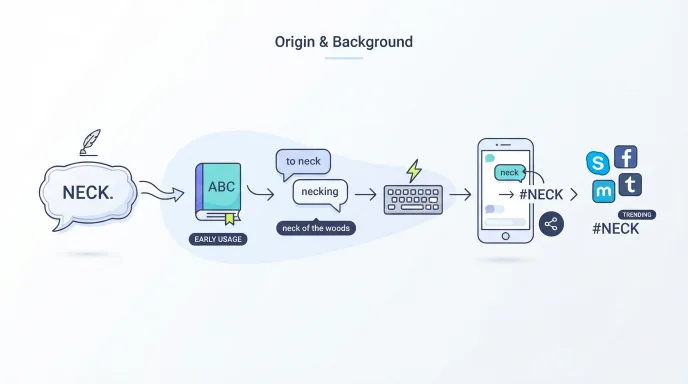
The slang use of “neck” comes from the idea that romantic kissing often involves contact around the neck area. The word became connected with romantic behavior through informal British and American English.
The term “necking” became especially popular during the 20th century when people used it to describe romantic physical affection between couples. It appeared frequently in older movies, books, and everyday speech.
Over time, slang changes. While “necking” was once a very common expression, many modern speakers may use terms like:
- Making out
- Kissing
- Kissing up on someone
- Getting physical
Today, “neck” is still understood by many English speakers, but its popularity varies by age group and region.
Comparison with similar slang terms
| Slang Term | Meaning | Tone | Common Usage |
| Neck | Romantic or passionate kissing | Informal | Casual conversations |
| Make out | Kissing passionately | Casual | Very common modern slang |
| Snog | Kissing passionately | Informal | More common in British English |
| Kiss | Showing affection with lips | Neutral | Used everywhere |
| Hook up | Romantic or sexual encounter | More broad | Dating conversations |
The main difference is that “neck” specifically focuses on kissing, while terms like “hook up” can have a much wider meaning.
When to avoid using neck
Although “neck” is not a harmful word, there are situations where it may not be the best choice.
Avoid using it in:
- Professional emails
- Formal presentations
- Conversations with strangers
- Academic writing
- Sensitive discussions where clear language is needed
For example, saying “They were necking” in a workplace report would sound informal and unnecessary.
Choosing simple words can prevent confusion and make communication more respectful.
Polite alternatives to neck
If you want a more neutral expression, use:
- Kissing
- Sharing a kiss
- Being affectionate
- Showing affection
- Spending romantic time together
These alternatives are easier for a wider audience to understand and are suitable in more situations.
Why people use this slang
People use slang because it makes communication faster, more casual, and more expressive. Words like “neck” can create a sense of familiarity among friends or within certain groups.
Common reasons people use slang include:
- Creating a relaxed tone
- Showing personality
- Following cultural trends
- Communicating with peers
- Making conversations feel less formal
Slang also changes language by creating new ways for people to express ideas.
Impact of using slang in communication
Using slang can make conversations feel natural and friendly, but it can also create misunderstandings.
Benefits:
- Makes conversations more casual
- Helps people connect socially
- Adds emotional meaning
Possible problems:
- Older or unfamiliar audiences may not understand it
- Some slang can sound inappropriate in formal settings
- Meaning can change depending on culture
Good communication means knowing when slang fits and when standard language is better.
Is neck safe for social media?
The word “neck” itself is generally safe to use on social media because it is not a hateful, threatening, or offensive term. However, users should consider the audience and context.
On public platforms:
- Use it carefully when discussing personal topics.
- Avoid using it toward people who may not welcome romantic comments.
- Remember that jokes can be misunderstood online.
A word that seems funny between friends may appear uncomfortable to others.
Examples Section: Different tones of usage
Friendly
“I saw you two necking during the movie. You’re definitely dating now!”
Tone: Friendly teasing.
Casual
“They were necking outside after the party.”
Tone: Simple description.
Argumentative
“You were too busy necking to notice what happened.”
Tone: Critical or annoyed.
Social media
“Everyone is talking about that scene where the characters start necking.”
Tone: Online discussion about entertainment.
Relationship conversation
“We were just necking, nothing serious.”
Tone: Explaining a romantic situation.
FAQs
“Neck” ka matlab slang mein kya hai?
Slang mein “neck” ka matlab hota hai kisi ko kiss karna ya “make out” karna, khaas taur par gardan (neck) ke area par kiss karna. Yeh word verb ki tarah use hota hai, jaise “let’s neck” ka matlab “chalo kiss karte hain / make out karte hain”.
“I wanna neck” ka matlab kya hai?
Iska matlab hai “main kiss karna chahta hoon” ya “main make out karna chahta hoon”. Yeh usually kisi romantic ya flirty context mein kaha jata hai.
“Necked a girl” ka matlab kya hai?
Iska matlab hai ke kisi ne kisi ladki ko kiss kiya ya uske sath make out kiya. Yeh past tense hai “to neck” verb ka.
Kya “neck” kiss ke liye slang hai?
Ji haan, “neck” aksar kiss ya make-out session ke liye slang ke tor par use hota hai khaas taur par passionate ya lambe kissing session ke liye.
“Getting neck” ka matlab kya hai slang mein?
Yeh phrase zyada explicit/sexual slang hai jo intimate physical activity refer karta hai is phrase ka use zyada tar casual ya vulgar conversations mein hota hai, aur yeh word ka meaning context ke hisab se vary bhi kar sakta hai.
British slang mein “neck” ka kya matlab hai?
British English mein “neck” ka ek alag matlab bhi hai iska matlab hota hai kisi drink ko jaldi se, ek hi saans mein pee lena. Jaise “neck your drink” ka matlab hai “apna drink jaldi khatam karo”. Isके ilawa British slang mein “neck” cheekiness ya boldness ke liye bhi kaha jata hai, jaise “he’s got some neck” (uska bara himmat hai / badtameezi hai).
Conclusion
The answer to what does neck mean in slang is that it usually refers to kissing or making out in a romantic context. The neck meaning slang is informal and should be understood based on the conversation, audience, and tone.
While “neck” is not offensive, it is not always suitable for formal situations. Using clearer alternatives like “kissing” or “showing affection” can help avoid confusion.
Like all slang, the meaning of “neck” depends on how and where it is used. Understanding context is the key to communicating effectively.
Related Topics!

Hi, I’m Rebecca Morris, a UK-based freelance writer and editor with a passion for creating clear, engaging, and well-researched content. I write about lifestyle, technology, travel, and consumer topics, with a focus on making complex information simple and useful for everyday readers. I enjoy producing accurate, practical, and trustworthy articles that help people make informed decisions. When I’m not writing, I love exploring the British countryside, discovering independent cafés, and staying up to date with the latest trends in digital media and online publishing