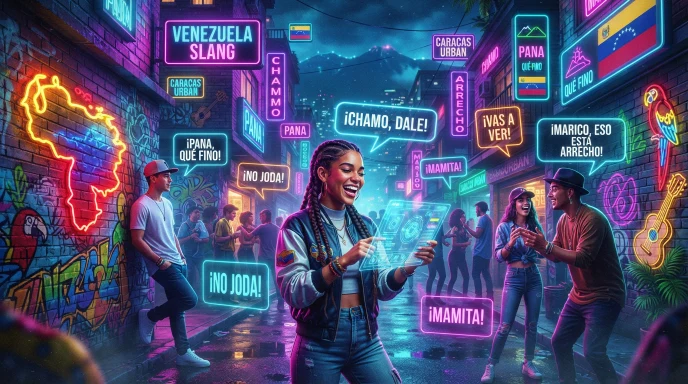
Venezuela slang words are informal expressions commonly used by people in Venezuela for everyday conversation.
Venezuela slang words are an important part of everyday conversations in Venezuela. Whether you’re traveling, learning Spanish, chatting with Venezuelan friends, or simply curious about Latin American culture, understanding local slang can help you communicate more naturally.
Like every country, Venezuela has its own unique expressions that often confuse Spanish learners because they aren’t taught in textbooks. Some slang words are friendly and humorous, while others can be rude depending on the context.
Knowing when and how to use them makes conversations smoother and helps you avoid misunderstandings.
In this guide, you’ll learn the most common Venezuela slang words, what they mean, where they’re used, real-life examples, and the situations where you should avoid using them.
Quick Answer:
Venezuela slang words are informal expressions commonly used in everyday conversations. They add personality, humor, and local flavor to the language, but their meanings often depend on context and tone.
What Are Venezuela Slang Words?
Venezuela slang words are informal words and phrases used by Venezuelans in daily speech. They often have meanings that differ from standard Spanish and can vary by region, age group, or social setting.
Many of these expressions are used among friends and family, while others are best avoided in formal conversations.
Most Common Venezuela Slang Words
Here are some of the most popular Venezuelan slang terms you’ll hear.
1. Chamo / Chama
Meaning: Guy, girl, buddy, or friend.
Example:
¡Hola, chamo! ¿Cómo estás?
English:
Hey, buddy! How are you?
2. Pana
Meaning: Close friend or pal.
Example:
Él es mi pana.
English:
He’s my friend.
3. Arrecho
This word changes meaning depending on the country.
In Venezuela, it often means:
- Very angry
- Extremely good or impressive (depending on context)
Example:
Estoy arrecho.
Meaning:
I’m really angry.
Or:
¡Qué arrecho ese concierto!
Meaning:
That concert was amazing!
4. Burda
Meaning: Very, extremely, or a lot.
Example:
Me gusta burda.
English:
I like it a lot.
5. Vaina
One of the most common Venezuelan words.
It can mean:
- Thing
- Situation
- Problem
- Object
- Stuff
Example:
Pásame esa vaina.
English:
Pass me that thing.
Are Venezuela Slang Words Rude, Offensive, or Neutral?
Not all slang has the same tone.
Neutral
- Chamo
- Chama
- Pana
- Guayoyo
- Fino
These are safe in most casual conversations.
Mild
- Burda
- Vaina
- Cónchale
These are informal but generally acceptable among friends.
Can Be Offensive
- Arrecho (depending on context)
- Ladilla (can sound insulting)
Always pay attention to the speaker’s tone and your relationship with the other person.
Where Are Venezuela Slang Words Commonly Used?
You’ll hear Venezuelan slang in many everyday situations, including:
- Conversations with friends
- Family gatherings
- Schools and universities
- Social media
- WhatsApp chats
- TikTok videos
- YouTube content
- Music and podcasts
Most slang is informal and should be avoided in business meetings, academic writing, and official documents.
Real-Life Examples of Venezuela Slang Words
Friendly
Hola, pana. ¿Todo bien?
English:
Hey, buddy. Everything good?
Casual
Esa película estuvo burda de buena.
English:
That movie was really good.
Social Media
Ese video está fino.
English:
That video is awesome.
Argumentative
Qué ladilla eres hoy.
English:
You’re so annoying today.
Flirting
Le está echando los perros desde ayer.
English:
He’s been flirting with her since yesterday.
Everyday Conversation
Pásame esa vaina.
English:
Pass me that thing.
Origin and Background of Venezuela Slang Words
Venezuelan slang has developed over many generations through cultural influences from Indigenous peoples, Spanish colonization, African traditions, immigration, and modern media.
Many expressions have existed for decades, while others became popular through television, music, comedy, and social media. Younger generations continue to create new slang, making the language dynamic and constantly evolving.
Comparison with Similar Spanish Slang
| Venezuela | Meaning | Similar Word | Country |
| Chamo | Friend, guy | Tío | Spain |
| Pana | Friend | Parcero | Colombia |
| Burda | Very | Re | Argentina |
| Fino | Cool | Chido | Mexico |
| Vaina | Thing | Cosa | Standard Spanish |
| Ladilla | Annoying | Pesado | Spain |
When to Avoid Using Venezuela Slang Words
Avoid slang in these situations:
- Job interviews
- Business emails
- Academic papers
- Formal speeches
- Government offices
- Professional presentations
Also be cautious when speaking with people from other Spanish-speaking countries, as some words have different meanings elsewhere.
Polite Alternatives
If you’re unsure whether slang is appropriate, use standard Spanish instead.
| Slang | Polite Alternative |
| Chamo | Amigo |
| Pana | Amigo |
| Burda | Mucho |
| Vaina | Cosa |
| Ladilla | Molesto |
| Arrecho | Enojado |
These alternatives are widely understood across the Spanish-speaking world.
Why People Use Venezuela Slang Words
People use slang because it:
- Makes conversations feel natural.
- Shows local identity and culture.
- Creates a sense of friendship.
- Adds humor and emotion.
- Helps speakers express themselves more casually.
Using the right slang at the right time can help you sound more like a native speaker.
Impact of Using Slang in Communication
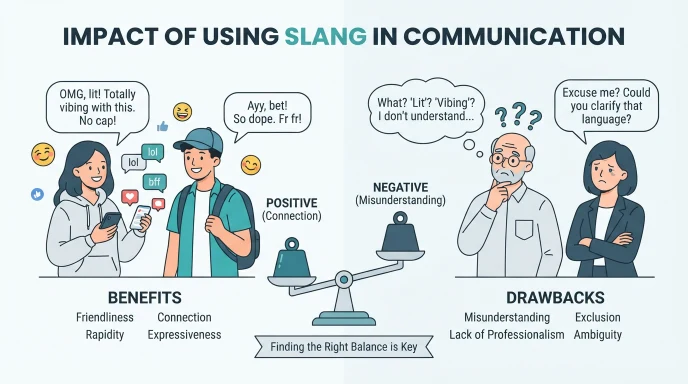
Slang can make conversations:
- More relaxed
- More expressive
- More engaging
- More culturally authentic
However, using slang incorrectly may confuse listeners or unintentionally offend someone. Learning the meaning and context behind each expression is just as important as memorizing the word itself.
Is It Safe for Social Media?
Yes. Most Venezuela slang words are commonly used on:
- TikTok
- X (formerly Twitter)
- YouTube comments
Still, avoid posting offensive or insulting slang publicly, especially if your audience includes coworkers, clients, or people unfamiliar with Venezuelan culture.
FAQs
What are the most common Venezuela slang words?
Some of the most popular are chamo, pana, vaina, burda, fino, arrecho, cónchale, and ladilla.
Is Venezuelan slang different from other Spanish slang?
Yes. Many expressions are unique to Venezuela, although some are shared with neighboring countries. Meanings can also change from one country to another.
Is “chamo” offensive?
No. It’s a friendly and common way to refer to a boy, girl, friend, or buddy.
What does “vaina” mean in Venezuela?
“Vaina” usually means “thing,” “stuff,” “object,” or “situation.” It’s one of the most versatile and commonly used words in Venezuelan Spanish.
Can I use Venezuela slang while traveling?
Yes, but use it respectfully and observe how locals use the expressions. If you’re unsure, standard Spanish is always a safe choice.
Why is Venezuelan slang so popular online?
Social media, music, comedy, and the global Venezuelan community have helped spread these expressions, making them familiar even to many non-Venezuelans.
Conclusion
Learning Venezuela slang words is one of the best ways to understand everyday conversations and connect with Venezuelan culture. Popular expressions like chamo, pana, vaina, burda, and fino are heard daily and add warmth, humor, and personality to the language.
Remember that slang is highly dependent on context, tone, and audience. While many Venezuelan slang words are friendly and harmless, others may be informal or carry different meanings in other Spanish-speaking countries. By understanding when and where to use them, you’ll communicate more naturally, avoid misunderstandings, and gain a deeper appreciation of Venezuela’s rich linguistic culture.
Explore This Topic

I am Alisha Abbas, a slang expert and language enthusiast specializing in modern slang, internet expressions, and everyday language trends. I study the meanings, origins, and cultural influences behind slang words to make them easy to understand for readers. My work focuses on exploring how language evolves and helping people communicate better in today’s fast-changing digital world.