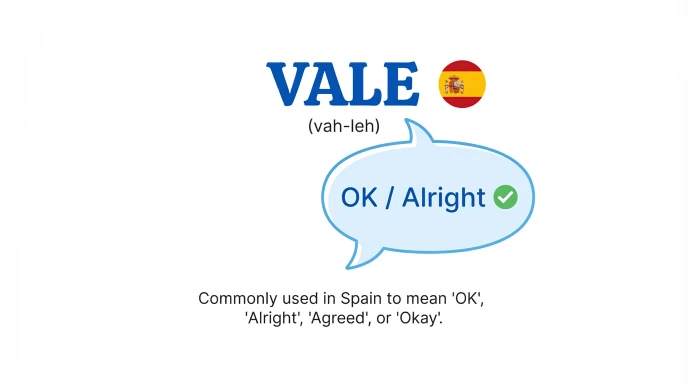
“Vale” in Spanish means “okay,” “alright,” or “I agree.” It is commonly used to say “OK” in Spain.
Vale spanish slang is a common phrase people search for when they see it in Spanish messages, social media comments, movies, or conversations. Many English speakers wonder what “vale” means because it appears frequently in casual Spanish communication.
Unlike many internet slang terms, vale is not a shortened word created online. It is a natural part of everyday Spanish speech.
People often search for “vale spanish slang meaning” because they want to understand if it means “okay,” “yes,” or something else depending on the situation. It can show agreement, acceptance, or acknowledgment in a friendly way.
Quick Answer:
Vale means “okay,” “alright,” or “got it” in Spanish. It is a casual and widely used expression, especially in Spain.
What does vale spanish slang mean in text?
In text conversations, vale is usually used to mean:
- Okay
- Alright
- Sure
- Got it
- Sounds good
- I agree
When someone writes “vale” in a message, they are usually confirming that they understand or accept something.
For example:
Person 1: “I’ll meet you at 7 PM.”
Person 2: “Vale.”
Here, “vale” means “Okay” or “That works.”
The word is especially common in informal chats between friends, family members, and coworkers. It gives a quick response without needing a long explanation.
Vale spanish slang full form and definition
Many people search for the vale spanish slang full form, but vale does not have a full form like internet abbreviations such as LOL or BRB.
The word vale comes from the Spanish verb valer, which means “to be worth” or “to be valid.” Over time, “vale” developed into a conversational expression used for agreement or confirmation.
The main definition of vale slang is:
A casual Spanish expression used to show agreement, acceptance, understanding, or approval.
It works similarly to English expressions like:
- “Okay”
- “Alright”
- “Fine”
- “Cool”
- “Sure”
Is vale rude, offensive, or neutral?
Vale is generally neutral and friendly. It is not considered rude or offensive in normal conversations.
However, like any expression, its meaning can change depending on tone and context.
For example:
Friendly tone:
“Vale, see you tomorrow!”
Meaning: “Okay, see you tomorrow!”
Annoyed tone:
“Vale, vale…”
Meaning: “Okay, okay…” (possibly showing impatience)
In text messages, repeated use can sometimes appear dismissive.
Examples:
- “Vale.” → Simple acknowledgment
- “Vale!!” → Excited agreement
- “Vale…” → Might sound uncertain or annoyed
The surrounding conversation matters more than the word itself.
Where is vale commonly used?
Vale is most strongly associated with Spain, where it is one of the most common everyday expressions. You will hear it frequently in casual conversations.
It is commonly used in:
- Text messages
- Social media chats
- Friend conversations
- Workplace discussions
- TV shows and movies from Spain
- Everyday spoken Spanish
Although Spanish speakers in other countries may understand vale, some regions use different expressions more often.
For example:
- Spain: “Vale” is extremely common.
- Latin America: People may more often say “okay,” “bueno,” “está bien,” or “de acuerdo.”
Real-life examples of vale usage

Here are examples showing different meanings and tones.
Friendly conversation
Friend 1: “Do you want to grab coffee later?”
Friend 2: “Vale, sounds good!”
Meaning: “Sure, that works.”
Casual texting
Person 1: “I sent you the photos.”
Person 2: “Vale, I’ll check them now.”
Meaning: “Okay, I’ll look.”
Workplace conversation
Manager: “Please finish this report before Friday.”
Employee: “Vale, I’ll do it.”
Meaning: “Understood.”
Argumentative situation
Person 1: “You never listen to me.”
Person 2: “Vale, whatever.”
Here, vale may sound less friendly because the second person’s tone suggests frustration.
Gaming or social media context
Player 1: “Join my team?”
Player 2: “Vale, invite me.”
Meaning: “Okay, invite me.”
Origin and background of vale
The origin of vale comes from the Spanish verb valer, which has historical roots in Latin. The Latin word “valere” meant “to be strong,” “to have value,” or “to be well.”
Over time, Spanish speakers began using “vale” as a way to confirm something was acceptable or valid. It gradually became a common conversational marker.
Today, vale is a cultural feature of everyday Spanish communication, especially in Spain. It is not considered modern internet slang, even though it is often discussed online as “Spanish slang.”
What does vale stand for compared with other meanings?
When people search “what does vale stand for,” they may find several meanings because “vale” can refer to different things in English.
Common meanings include:
| Term | Meaning | Usage |
| Vale (Spanish slang) | Okay, alright, got it | Spanish conversations |
| Point of Sale (POS) | Place where purchases happen | Business and retail |
| Point of Service (POS) | Customer service or service location | Healthcare and business |
| Piece of Sh*t (POS) | Insult or criticism | Informal English slang |
The meaning depends completely on the language and context.
If you see “vale” in a Spanish conversation, it almost always means “okay,” not the English meanings above.
Comparison with similar Spanish expressions
| Expression | Meaning | Common Use |
| Vale | Okay / alright | Very common in Spain |
| Bueno | Well / okay | Used across many Spanish-speaking regions |
| Está bien | It’s fine / okay | More formal or clear agreement |
| De acuerdo | Agreed | More formal agreement |
| Claro | Of course / clearly | Showing understanding |
Vale is usually shorter and more casual than these alternatives.
Why do people use vale?
People use vale because it is quick, natural, and easy. Similar to saying “okay” in English, it helps conversations move forward without unnecessary explanation.
Reasons people use vale include:
- To confirm they understand something
- To accept a suggestion
- To end a short conversation politely
- To show agreement
- To respond quickly in text messages
In fast communication, short words like vale make conversations smoother.
Impact of using vale in communication
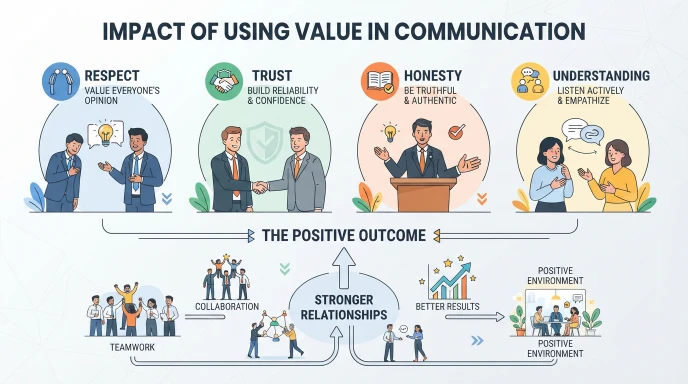
Using vale correctly can make communication feel more natural when speaking Spanish. It shows familiarity with everyday language rather than only textbook Spanish.
However, learners should remember that language depends on culture. A word that sounds simple in one country may have different levels of popularity elsewhere.
For Spanish learners, understanding expressions like vale helps improve:
- Listening skills
- Conversation ability
- Cultural awareness
- Confidence when communicating
When to avoid using vale
Although vale is harmless, there are situations where another expression may be better.
Avoid using only “vale” when:
- Writing a formal business email
- Speaking in a very professional setting
- Communicating with someone who expects formal language
- Writing official documents
Instead, use more formal phrases such as:
- “De acuerdo”
- “Entendido”
- “Confirmado”
For example:
Less formal:
Vale, I’ll send it today.
More formal:
Entendido, I will send it today.
Polite alternatives to vale
If you want to sound more formal or professional, consider these alternatives:
- Entendido — Understood
- De acuerdo — Agreed
- Perfecto — Perfect
- Está bien — That is fine
- Gracias, lo haré — Thank you, I will do it
These expressions are useful when speaking with customers, managers, or people you do not know well.
Is vale safe for social media?
Yes, vale is completely safe for social media. It is a normal Spanish word and does not contain offensive meaning.
You may see it in:
- Instagram comments
- TikTok conversations
- WhatsApp messages
- Online gaming chats
- Spanish-language forums
The only thing to consider is tone. A short reply like “vale” may appear cold if the conversation requires more emotion.
For a warmer response, people often write:
- “Vale 😊”
- “Vale, perfecto!”
- “Vale, gracias!”
Adding extra words or emojis can make the message feel friendlier.
Examples of vale in different tones
Friendly
“Vale! See you tomorrow 😊”
Meaning: Excited agreement.
Neutral
“Vale, I understand.”
Meaning: Simple confirmation.
Casual
“Vale, let’s go.”
Meaning: Okay, let’s do it.
Argumentative
“Vale, whatever you say.”
Meaning: Can sound sarcastic depending on tone.
Social media
“Vale 😂 that was funny.”
Meaning: Casual reaction.
FAQs
What does vale spanish slang mean?
Vale means “okay,” “alright,” or “got it” in Spanish. It is commonly used in casual conversations.
Is vale a Spanish slang word?
Vale is often called slang because it is informal, but it is actually a normal everyday Spanish expression.
Is vale rude?
No, vale is not rude. It is usually friendly or neutral, although tone can change how it sounds.
What does vale mean in texting?
In texting, vale usually means “okay,” “sure,” or “I understand.”
Is vale used in Latin America?
Some Latin American Spanish speakers understand vale, but it is especially common in Spain.
What does vale stand for in English?
Depending on context, vale can refer to different English terms, but in Spanish conversations it means “okay.”
Conclusion
Vale spanish slang meaning in text is simple: it means “okay,” “alright,” or “got it.” It is one of the most common casual expressions used in Spanish conversations, especially in Spain.
Although people may search for “vale spanish slang full form” or “what does vale stand for,” vale is not an abbreviation. It is a natural Spanish word that has become an important part of everyday communication.
Understanding context is the key. In friendly chats, vale sounds natural and positive. In formal situations, more professional alternatives may be better. If you see it in a message, movie, or social media post, vale is usually just a simple way of saying “okay.”
Read more about!
Fire Meaning in Slang: What Does Fire Mean in Text?

I am Alisha Abbas, a slang expert and language enthusiast specializing in modern slang, internet expressions, and everyday language trends. I study the meanings, origins, and cultural influences behind slang words to make them easy to understand for readers. My work focuses on exploring how language evolves and helping people communicate better in today’s fast-changing digital world.