Trini slang words come from Trinidad and Tobago’s unique Caribbean dialect, blending English, French Creole, Hindi, and African influences into vibrant, expressive texting language.
If you’ve ever received a text full of words you didn’t recognize from a Trinidadian friend, you’ve likely encountered Trini slang a colorful mix of Caribbean: Trinidad and Tobago’s slang reflects the island’s rich cultural history, drawing from English, French Creole, Hindi, Spanish, and African languages to create expressions found nowhere else.
These words show up constantly in texting, social media, and everyday conversation among Trinis, both on the islands and in the diaspora community abroad.
This guide breaks down the most common Trini slang words you’ll encounter in texts, what they actually mean, and how to use them naturally in conversation.
Quick Answer:
Trini slang words are informal expressions commonly associated with Trinidad and Tobago. Popular examples include lime for hanging out, bacchanal for drama or commotion, fete for a party, doh for “don’t,” and allyuh for “all of you.”
What Does “Trini Slang Words” Mean?
“Trini” is an informal term commonly used for something or someone associated with Trinidad and Tobago. Therefore, Trini slang words are casual words and expressions used in Trinidadian speech.
Trinidad and Tobago has a distinctive variety of English often called Trinidadian English or Trinidadian Creole English, alongside other languages and varieties used by its diverse population.
You may hear Trini expressions in:
- Everyday conversations
- Text messages
- Social media
- Music
- Carnival celebrations
- Comedy
- Local television
- Street conversations
- Friend groups
Some words have meanings that are very different from standard American or British English.
For example, if someone says:
“We goin’ to lime later.”
A visitor might think they are talking about the fruit.
In Trini usage, lime means to hang out or socialize.
Trini Slang Full Form and Definition
There is no single Trini slang full form because “Trini slang” describes a group of expressions rather than one abbreviation.
Here are some of the most useful examples:
| Trini slang | Meaning in English | General tone |
| Lime | Hang out/socialize | Friendly |
| Bacchanal | Drama, trouble, commotion | Informal |
| Fete | Party | Casual |
| Allyuh | All of you | Casual |
| Doh | Don’t | Informal |
| Ent | Isn’t it?/right? | Conversational |
| Meh | My | Informal |
| Ah | I | Informal |
| Gyul | Girl | Casual |
| Dais | That is/that’s | Informal |
The spelling of Trini expressions can vary because they represent pronunciation and local speech rather than a standardized formal writing system.
Is Trini Slang Rude, Offensive, or Neutral?
Most Trini slang is not automatically rude or offensive.
Words such as lime, fete, allyuh, and doh are generally informal rather than offensive.
However, like slang anywhere else, the meaning depends on:
- The exact word
- The speaker’s tone
- The relationship between people
- The situation
- If the expression is being used jokingly or aggressively
Some expressions can become insulting when used in an argument, while others are completely harmless.
For example:
“We going to lime tonight.”
is friendly.
But a phrase containing an insult or profanity can obviously have a different tone.
The important lesson is that Trini slang meaning should always be understood in context.
Where Are Trini Slang Words Commonly Used?
Trini expressions are especially common in informal communication in Trinidad and Tobago.
You may encounter them during:
- Conversations with friends
- Family gatherings
- Carnival
- Parties and fetes
- Music and soca culture
- Social media
- Local comedy
- Sports conversations
- Street-food outings
- Texting
Trinidad’s cultural vocabulary is closely connected to social life. Even the official tourism material uses “lime” in the sense of hanging out or spending time together.
Popular Trini Slang Words and Their Meanings
1. Lime
Meaning: To hang out, relax, or socialize.
Example:
“We liming by the beach later.”
Meaning:
“We are hanging out by the beach later.”
This is one of the most recognizable Trinidadian expressions.
It does not necessarily refer to the citrus fruit.
2. Bacchanal
Meaning: Drama, confusion, trouble, gossip, or a chaotic situation.
Example:
“Boy, plenty bacchanal happening over there.”
Meaning:
“There is a lot of drama happening over there.”
The word can describe anything from playful social drama to serious commotion, depending on context.
3. Fete
Meaning: A party or celebration.
Example:
“Are you going to the fete tonight?”
Meaning:
“Are you going to the party tonight?”
The word is strongly associated with Caribbean party culture and is particularly familiar in Trinidad and Tobago.
Carnival and music are major parts of Trinidadian cultural life, with soca, calypso, steelpan, and large celebrations contributing to the country’s distinctive cultural vocabulary.
4. Allyuh
Meaning: All of you / you all.
Example:
“Allyuh coming with me?”
Meaning:
“Are all of you coming with me?”
It is commonly used when addressing multiple people.
5. Doh
Meaning: Don’t.
Example:
“Doh worry about it.”
Meaning:
“Don’t worry about it.”
This is a good example of how local pronunciation and spelling can appear in written Trini speech.
6. Ent
Meaning: Isn’t it? / right? / you know?
Example:
“That was a good party, ent?”
Meaning:
“That was a good party, right?”
It can work as a conversational tag at the end of a statement.
7. Gyul
Meaning: Girl.
Example:
“Gyul, you need to hear this story!”
Meaning:
“Girl, you need to hear this story!”
It can be friendly and expressive, especially between people who are comfortable with each other.
8. Meh
Meaning: My.
Example:
“Meh friend is coming later.”
Meaning:
“My friend is coming later.”
This spelling represents local pronunciation.
Real-Life Examples of Trini Slang
Learning individual definitions is useful, but seeing the words in complete sentences makes them much easier to understand.
Friendly Example
“Allyuh coming to lime later?”
Meaning:
“Are you all coming to hang out later?”
Casual Example
“Doh worry, we go handle it.”
Meaning:
“Don’t worry, we’ll handle it.”
Party Example
“The fete was real nice last night.”
Meaning:
“The party was really good last night.”
Argumentative Example
“Why you bringing bacchanal here?”
Meaning:
“Why are you bringing drama/trouble here?”
Social Media Example
“Plenty bacchanal in the comments today 😂”
Meaning:
“There is a lot of drama in the comments today.”
Gaming Example
“Allyuh better defend the base!”
Meaning:
“You all better defend the base!”
The grammar and spelling in casual Trini writing can vary. People may write expressions differently depending on their personal style and the audience.
Trini Slang for Friends and Socializing
One of the most useful groups of Trini expressions relates to spending time with other people.
Lime is particularly important because it describes more than simply “hanging out.” It can suggest relaxing, chatting, eating, drinking, listening to music, or enjoying someone’s company.
For example:
“We liming at home.”
could mean:
“We’re hanging out at home.”
A tourist guide for Trinidad even describes visitors choosing to “lime” after a local music and food experience, using the word specifically in the sense of hanging out.
This makes lime one of the most useful Trini slang words for visitors to recognize.
Trini Slang vs. Standard English
Trini expressions often communicate the same basic idea as standard English but with a different cultural flavor.
| Trini expression | Standard English | Meaning |
| We going to lime | We’re going to hang out | Socializing |
| Allyuh come here | You all come here | Addressing a group |
| Doh do that | Don’t do that | Negative command |
| Plenty bacchanal | Lots of drama | Trouble/commotion |
| We going to a fete | We’re going to a party | Celebration |
These expressions are not necessarily “incorrect English.” They are examples of regional and cultural language.
Trini Slang vs. Other Caribbean Slang
Caribbean countries share some linguistic influences, but slang is not identical from island to island.
| Trini expression | General Caribbean comparison | Meaning |
| Lime | Similar social expressions exist elsewhere | Hang out |
| Fete | Used widely in Caribbean contexts | Party |
| Bacchanal | Common in Caribbean usage | Drama/commotion |
| Allyuh | Distinctive regional form | You all |
| Doh | Informal Caribbean usage | Don’t |
A word may be understood outside Trinidad but can have a particularly strong association with Trinidadian culture.
This is why it is better to learn Trini slang words in their cultural context rather than assuming every Caribbean island uses the same vocabulary.
Origin and Background of Trini Slang
Trinidad and Tobago has a complex cultural history, and its everyday speech reflects that diversity.
Trinidadian language has developed through contact among communities with African, Indian, European, Indigenous, and other Caribbean influences. The result is a rich linguistic environment in which English interacts with local pronunciation, grammar, vocabulary, and cultural expressions.
Food and cultural traditions also contribute to everyday vocabulary. Trinidad’s food culture includes dishes such as doubles, roti, bake and shark, aloo pie, curry, and other local favorites.
Music and Carnival have also helped spread Trinidadian expressions internationally. Steelpan, calypso, and soca are closely connected with Trinidad’s cultural identity, and Carnival remains a major cultural celebration.
Trini Slang for Food and Culture
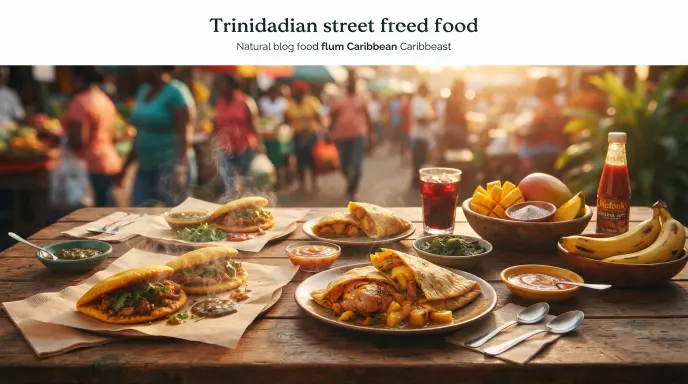
Some words associated with Trinidadian culture are not technically slang, but visitors may hear them frequently.
For example:
- Doubles: a popular street food made with two fried flatbreads and curried chickpeas.
- Bake and shark: fried shark served in fried bread with toppings.
- Roti: a popular flatbread-based meal with various fillings.
- Fete: party or celebration.
- Lime: socializing or hanging out.
Doubles are a well-known Trinidadian street food and have been part of the country’s food culture since the 1930s.
These cultural terms can appear alongside slang in everyday conversations.
When Should You Avoid Using Trini Slang?
If you are not familiar with the local culture, it is wise to understand a word before using it.
Avoid forcing slang into:
- Formal business writing
- Academic papers
- Official documents
- Professional presentations
- Formal interviews
- Legal communication
You should also avoid copying an accent or exaggerating pronunciation for comedy. Using regional vocabulary respectfully is different from mocking the way people speak.
If you are speaking with someone from Trinidad, listening to how they naturally use the language is usually the best way to learn.
Polite Alternatives to Trini Slang
Most common Trini slang does not require a “polite alternative” because it is not inherently offensive.
However, if you want to communicate with an international audience, standard English can make your meaning clearer.
For example:
Trini:
“We going to lime.”
Standard English:
“We’re going to hang out.”
Trini:
“Allyuh coming?”
Standard English:
“Are you all coming?”
Trini:
“Doh worry.”
Standard English:
“Don’t worry.”
This can be useful when writing for readers who have never encountered Trinidadian English.
Why Do People Use Trini Slang?
People use regional slang for many of the same reasons people use slang anywhere else.
It can:
- Show cultural identity
- Build a sense of community
- Make speech more expressive
- Create humor
- Make conversations feel relaxed
- Connect people with local traditions
- Make music and entertainment more authentic
Slang is often more than a shortcut. It can communicate where someone comes from and which cultural community they identify with.
That is why replacing every Trini expression with standard English can sometimes remove part of the original personality.
Impact of Trini Slang on Communication
Trini slang can make communication lively and expressive, but it can also confuse people unfamiliar with the vocabulary.
For example, a visitor who hears:
“We going to lime.”
might initially think the speaker is talking about fruit.
Similarly, someone unfamiliar with bacchanal may not immediately understand that it can describe drama, trouble, or commotion.
The best way to understand regional slang is to look at:
- The complete sentence
- The speaker’s tone
- The situation
- The relationship between speakers
- The local culture
Context is especially important when the same word has different meanings in different countries.
Is Trini Slang Safe for Social Media?
Generally, yes.
Many Trini slang words are completely suitable for social media, especially expressions such as:
- Lime
- Fete
- Allyuh
- Doh
- Ent
However, individual expressions can become offensive depending on how they are used.
If you are creating content for an international audience, consider giving a short explanation the first time you use an unfamiliar word.
For example:
“We’re going to lime tonight basically, we’re going to hang out.”
This allows readers from outside Trinidad to understand the expression immediately.
Common Search Queries About Trini Slang Words
People looking for Trinidadian expressions often search for:
- Trini slang words
- Trinidad slang
- Trinidadian slang words
- Trini words and meanings
- Trini slang meaning
- Trinidad slang dictionary
- Trini words for friends
- Trini words for party
- Trini slang for hanging out
- Trinidadian English slang
- what does lime mean in Trinidad
- what does bacchanal mean
- what does allyuh mean
- Trini phrases and meanings
These searches all point toward the same goal: understanding the vocabulary and cultural context of Trinidadian informal speech.
FAQs
What are some common Trini slang words?
Common examples include lime, bacchanal, fete, allyuh, doh, ent, gyul, and meh.
What does “Trini” mean in slang?
“Trini” is simply the informal, affectionate short form of “Trinidadian” someone from Trinidad and Tobago. It’s used both by locals and the diaspora as a proud cultural identifier, as in “Trini to de bone” (proud of being Trinidadian).
What are some Trini slang words?
Popular Trini slang includes “lime” (to hang out or a casual gathering), “bacchanal” (commotion, a wild party, or a fight between neighbours, family, or friends), “vaps” (a sudden, seemingly unexplainable impulse), and “doux doux” (a term of endearment, especially for romantic love or a small child).
How do Trinis say “girl”?
Trinis commonly say “gyul” instead of “girl” a phonetic Caribbean spelling/pronunciation used constantly in everyday speech, music (soca), and texting.
How do you say “I love you” in Trinidadian?
There isn’t one fixed slang phrase Trinis typically say “I love you” plainly, but affection is often expressed through terms like “doux doux,” a sweet nickname used for someone you care about romantically or a young child.
How do you say “hi” in Trinidad slang?
Common casual greetings include “wuz de scene?” or “wham now?” both roughly meaning “what’s happening?” or “what’s up?” used the way English speakers might say “hey” or “yo.”
What does “orhor” mean?
This isn’t a widely documented standard Trini slang term. It may be a phonetic spelling of “or” used as a casual sentence-ending tag in Trini speech (similar to how some people add “eh?” or “or wha?” at the end of a sentence) but the exact spelling and meaning can vary by speaker, so double-check with a native source before publishing this one to avoid inaccurate content.
Conclusion
Trini slang words offer a fascinating look at the language and culture of Trinidad and Tobago. Expressions such as lime, fete, bacchanal, allyuh, doh, and ent can sound unusual to someone unfamiliar with Trinidadian speech, but they become easy to understand once you know their context.
The most important examples to remember are simple: lime means hanging out, fete means a party, bacchanal refers to drama or commotion, and allyuh means all of you.
Trini slang is generally informal rather than offensive, although tone and context always matter. It is especially common in conversations, music, social media, parties, and cultural events.
If you are learning these expressions, do not focus only on memorizing definitions. Pay attention to how people use the words naturally. That is the best way to understand the humor, emotion, identity, and cultural meaning behind Trini slang.
Trinidadian expressions are part of a broader cultural picture that includes Carnival, soca, calypso, steelpan, food, and community life.
Learn More!

I am Alisha Abbas, a slang expert and language enthusiast specializing in modern slang, internet expressions, and everyday language trends. I study the meanings, origins, and cultural influences behind slang words to make them easy to understand for readers. My work focuses on exploring how language evolves and helping people communicate better in today’s fast-changing digital world.